Finally: Good LED lights

Collapse
This topic is closed.
X
X
 
  • Time
  • Show
Clear All
new posts
  • Chris_B
    Established Member
    • Apr 2006
    • 216
    • Cupertino, CA

    #1

    Finally: Good LED lights

    I recently stumbled on some very nice replacements for most of our CFL bulbs while cruising our local Lowe's.

    Sylvania has introduced some excellent LED bulbs that *finally* have good color (we strongly prefer 2700K). Every other LED lamp (and most CFLs) have been rejected by SWMBO within < 30 sec - even the vaunted ($100) Cree bulbs... But she actually likes these!
    Link to bulbs & Detailed info
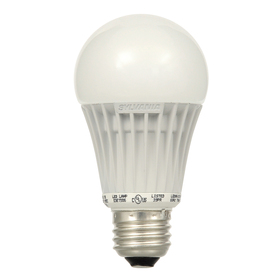
    Instant-on is a huge benefit, they support dimming, and are even more efficient than comparable CFLs. Combined with some slightly modified $2.50 reflectors from 1000bulbs, these have replaced every 75W PAR30 lamp in our house. The intensity is slightly lower, but the lighting is more even.
    Link to reflectors

    The obvious downside is that they are still expensive ($25 ea), but at our crazy electricity rates (see this thread) the payback is very quick compared to incandescents, and they are rated to last 50,000 hours. Did I mention that they are instant-on??

    So far I have not seen them anywhere except Lowe's, and they seem to be having a hard time keeping them in stock at our local store. Hopefully the cost will continue to decline as volume ramps.
  • Chris_B
    Established Member
    • Apr 2006
    • 216
    • Cupertino, CA

    #2
    FWIW, I just calculated the specific payback numbers (at $0.40/kWh):

    "40W" LEDs @ $25 ea & 50k hr life:
    • 930 hrs (~6 mos) vs. 75W incandescents
    • 10,000 hrs (~5 yrs) vs. 14W CFLs


    "60W" LEDs @ $40 ea & 25k hr life:
    • 1,500 hrs (~9 mos) vs. 75W incandescents
    • 50,000 hrs (= never) vs. 14W CFLs

    Hopefully my math is correct, but I presume Loring will check.

    I can't explain why the lower-output (in rated lumens) LEDs "seem" comparable to higher output CFLs, but that is my experience. It is probably some combination of the true instant-on effect, plus the fact that all of the light energy radiates towards the "top"-end of the bulb (and hence out the bottom of the reflector). We probably will use 60W LED bulbs to replace two halogens directly over the sink, but otherwise the 40W bulbs are bright enough for every location in our house.

    Comment

    • leehljp
      The Full Monte
      • Dec 2002
      • 8732
      • Tunica, MS
      • BT3000/3100

      #3
      Thanks for posting this. This is basically what was available in Japan when I left. And the pricing is just about the same for this basic model. ON the right of the Lowes page was a "Customers also viewed" list. In that list was a different bulb for $9.98. It was an inch longer, had slightly different specs but that model and price was also available last summer and fall over there. I am glad to see the US catching up.

      I still think that $25.00 is too high and will probably go with this type instead of the CFL bulbs that we now have. I can't complain about the CFL bulbs simply because of the cost savings in the summers since installing them. Our organization's house we lived in, in Japan, and our house here have CFL bulbs installed. For the roughly $100.00 a monthly savings for May-Sept due to A/C not having to cool the incandescent's heat greatly off sets the slow light up in winter.

      I look forward to using these LED bulbs and look forward to the improvements and bulb cost reductions that are bound to come in the next two years or so, also.
      Hank Lee

      Experience is what you get when you don't get what you wanted!

      Comment

      • pelligrini
        Veteran Member
        • Apr 2007
        • 4217
        • Fort Worth, TX
        • Craftsman 21829

        #4
        One thing that really impacts CFL lifespans and regular fluorescent lamps are on/off cycles or strikes. It's hard to get a published hourly lifespan on a CFL that is installed in a frequently switched fixture.
        Erik

        Comment

        • leehljp
          The Full Monte
          • Dec 2002
          • 8732
          • Tunica, MS
          • BT3000/3100

          #5
          Originally posted by pelligrini
          One thing that really impacts CFL lifespans and regular fluorescent lamps are on/off cycles or strikes. It's hard to get a published hourly lifespan on a CFL that is installed in a frequently switched fixture.
          I don't know what expected lifespans in correlation to on/off cycles are for most people, but back in the summer of '04, I purchased about 12 CFL bulbs and soon after purchased 8 more in Japan. The first 12, I paid the equivalent of about $15.00 each. The next 8, I paid about $8.00 to $10.00 each. I started replacing the cheaper ones after about 3 years but some lasted about 5. Half of the original 12 higher quality purchased at the higher cost were still in use after 6 years, living room, Dinning room and kitchen. On/Off cycles were about 5 to 7 times a day on average (when I was at home, and LOML loves to turn them OFF.

          For a CFL bulb to last 4 to 6 years, the cost savings over a $.50 bulb replaced every 4 month to 6 months including the electricity savings was MORE than worth it. The on/off duty cycle had little effect, IMO.

          IN my USA house, I replaced about the same amount of CFL bulbs in '05. Of course we were not here for 11 months of the year but our daughter was. Some of those bulbs are still working fine.

          IF a bulb works for 4 to 6 years anyway, the on/off cycle should not be a factor . . . unless it is turned on and off 20 or 30 times a day.
          Hank Lee

          Experience is what you get when you don't get what you wanted!

          Comment

          • Chris_B
            Established Member
            • Apr 2006
            • 216
            • Cupertino, CA

            #6
            Originally posted by leehljp
            ON the right of the Lowes page was a "Customers also viewed" list. In that list was a different bulb for $9.98. It was an inch longer, had slightly different specs but that model and price was also available last summer and fall over there.
            If you are OK with 3000K (we're not), then $10 each is a screaming deal. The Lowe's site indicates that this is a special price good through 5/9, but presumably the standard pricing is headed in this direction RealSoonNow(tm). But for us, the payback is less than 6 months, so it makes no sense to wait.

            Comment

            • Chris_B
              Established Member
              • Apr 2006
              • 216
              • Cupertino, CA

              #7
              Originally posted by leehljp
              For a CFL bulb to last 4 to 6 years, the cost savings over a $.50 bulb replaced every 4 month to 6 months including the electricity savings was MORE than worth it. The on/off duty cycle had little effect, IMO.
              IF a bulb works for 4 to 6 years anyway, the on/off cycle should not be a factor . . . unless it is turned on and off 20 or 30 times a day.
              Obviously this depends on the application. We have several walk-in closets where CFLs wore out in a few months, and the main lights in the garage (and back porch light) did not last much longer.

              Comment

              • leehljp
                The Full Monte
                • Dec 2002
                • 8732
                • Tunica, MS
                • BT3000/3100

                #8
                Originally posted by Chris_B
                If you are OK with 3000K (we're not), then $10 each is a screaming deal. The Lowe's site indicates that this is a special price good through 5/9, but presumably the standard pricing is headed in this direction RealSoonNow(tm). But for us, the payback is less than 6 months, so it makes no sense to wait.
                LOML and I both do not like the below 3000K. We are not fond of the 5000K daylight type but, IIRC, we had something in the equivalent of 3500-4000K in Japan. Warm glow drives us nuts!

                You did make me think of something about this though. On another forum last week, there were discussions of 5700K range (which I cannot stand.) for a workshop. This makes me wonder if the ratings are different in Japan VS here.
                Hank Lee

                Experience is what you get when you don't get what you wanted!

                Comment

                • leehljp
                  The Full Monte
                  • Dec 2002
                  • 8732
                  • Tunica, MS
                  • BT3000/3100

                  #9
                  Chris,

                  Have you figured the cost advantage of the LEDs over the CFLs? I didn't mean to knock your choice of LEDs over CFLs, I will probably be moving to those as CFLs quit working.

                  The one problem that caused me to stay away from them in Japan was that the lumens were about 20% less than CFLs of the same or similar wattage. I could take a 5 or 10% cut but 20% decrease in lighting was too much for me. Even the displays were noticeable less light as compared to the CFLs of similar wattage. In spite of that, almost every home center has been pushing the LEDs since last summer.
                  Hank Lee

                  Experience is what you get when you don't get what you wanted!

                  Comment

                  • Chris_B
                    Established Member
                    • Apr 2006
                    • 216
                    • Cupertino, CA

                    #10
                    Originally posted by leehljp
                    LOML and I both do not like the below 3000K. We are not fond of the 5000K daylight type but, IIRC, we had something in the equivalent of 3500-4000K in Japan. Warm glow drives us nuts!
                    Light color preference varies widely (we prefer the "warm glow" - aka 'yellowish-tint' ), so ignore the descriptive marketing labels (soft/daylight/warm/natural...) and focus on color temperature (degrees Kelvin) that *you* like! Assuming the manufacturer specs are accurate (and the color rendering index - CRI - is OK), color temp is very specific, and should look the same from different manufacturers.

                    Comment

                    • Chris_B
                      Established Member
                      • Apr 2006
                      • 216
                      • Cupertino, CA

                      #11
                      Originally posted by leehljp
                      Chris,

                      Have you figured the cost advantage of the LEDs over the CFLs? I didn't mean to knock your choice of LEDs over CFLs, I will probably be moving to those as CFLs quit working.

                      The one problem that caused me to stay away from them in Japan was that the lumens were about 20% less than CFLs of the same or similar wattage. I could take a 5 or 10% cut but 20% decrease in lighting was too much for me. Even the displays were noticeable less light as compared to the CFLs of similar wattage. In spite of that, almost every home center has been pushing the LEDs since last summer.
                      No worries. I've been using CFLs since they were new-and-expensive, and actively looking for decent LED alternatives. I've bought (and returned) quite a few! Hence the original post.

                      I included a comparison with CFLs in my earlier post, but IMO the only compelling reason to switch is if you really value true instant-on (not the so-called instant-on CFLs). This was a major point of contention in our home, so I am thrilled to remove this obstacle to widespread adoption.

                      Depending on the particular installation, I've found that good reflectors can make a huge impact on perceived light output. Even so, I am surprised that the "40W" LEDs (~400 lumens) work so well as replacements for 75W incandescent PAR30 bulbs. The output is definitely not as bright for each bulb, but the improved evenness makes the kitchen feel at least as bright overall. I also did not try a comparison with brand-new incandescents, which probably are brighter.

                      Regarding CFL & LED efficiency, it looks like the Watts/lumen is about the same right now for 40-60W equivalents. This will also probably continue to improve for LEDs.

                      Comment

                      • Poobah
                        Forum Newbie
                        • Sep 2010
                        • 77
                        • SoCal
                        • BT3100

                        #12
                        This is pretty interesting. I've been waiting for a good LED bulb to come along. I bought a bunch of Lights America bulbs at Sams Club and Walmart, but they aren't really up to snuff.

                        Just out of curiosity as a math guy, can you post the details of your math calculation? I'd like to run the numbers for myself before I go spend a couple hundred on new bulbs!

                        Where is CA do you live where they charge $0.40/kWh? That's nuts. I thought LA county SCE was horrible, but they top out at about $0.32 in tier 5.

                        Comment

                        • LCHIEN
                          Super Moderator
                          • Dec 2002
                          • 21886
                          • Katy, TX, USA.
                          • BT3000 vintage 1999

                          #13
                          Originally posted by Chris_B
                          FWIW, I just calculated the specific payback numbers (at $0.40/kWh):

                          "40W" LEDs @ $25 ea & 50k hr life:
                          • 930 hrs (~6 mos) vs. 75W incandescents
                          • 10,000 hrs (~5 yrs) vs. 14W CFLs


                          "60W" LEDs @ $40 ea & 25k hr life:
                          • 1,500 hrs (~9 mos) vs. 75W incandescents
                          • 50,000 hrs (= never) vs. 14W CFLs

                          Hopefully my math is correct, but I presume Loring will check.

                          I can't explain why the lower-output (in rated lumens) LEDs "seem" comparable to higher output CFLs, but that is my experience. It is probably some combination of the true instant-on effect, plus the fact that all of the light energy radiates towards the "top"-end of the bulb (and hence out the bottom of the reflector). We probably will use 60W LED bulbs to replace two halogens directly over the sink, but otherwise the 40W bulbs are bright enough for every location in our house.
                          since you ask, I get 1786 hrs instead of 930 hours.
                          I assumed incandescant bulbs are free, LED bulb is $25
                          Inc uses 75W, LED uses 40W
                          50KHr life is irrelavant
                          electricity is 0.40/KWH

                          you didn't say how much your CFLs cost so I could not check the 10,000 hour number
                          you didn't say how many hours per day you presume to use the light so I can't check your conversion to days, even if your hours were right.

                          the attached Wolfram Alpha calculatioins shows plot of $ (vert) vs time (Horizontal X-axis). The LED line thru $25, 0 shows the initial cost of $25 and lower usage rate, the Incandescant line thru $0,0 shows no initial cost but faster consumption of electricity per time. They cross at 1786 so after 1786 operating hours the LED is cheaper.
                          Attached Files
                          Last edited by LCHIEN; 05-04-2011, 10:23 PM.
                          Loring in Katy, TX USA
                          If your only tool is a hammer, you tend to treat all problems as if they were nails.
                          BT3 FAQ - https://www.sawdustzone.org/forum/di...sked-questions

                          Comment

                          • Chris_B
                            Established Member
                            • Apr 2006
                            • 216
                            • Cupertino, CA

                            #14
                            Originally posted by LCHIEN
                            Inc uses 75W, LED uses 40W
                            Very fancy!! But the discrepancy is that the LED uses 8W (not 40W).
                            The "40W" LED is similar light output as a 40W incandescent (~400 lumens), but only draws 8W (the "60W" LED bulbs put out ~800 lumens, but draw 12W).

                            I calculate it old-school:

                            Savings (75W-8W) = 67W
                            Savings in kW = 0.067kW
                            Marginal electricity rate/hr = $0.40
                            => Savings/hr = 0.067*0.40 = 0.0268

                            Net LED bulb cost (assuming incandescent is $0) = $25
                            => Hrs to break-even = 25/0.0268 = 932

                            I assume that 1 year = ~2,000 hours, but YMMV.

                            Comment

                            • Chris_B
                              Established Member
                              • Apr 2006
                              • 216
                              • Cupertino, CA

                              #15
                              Originally posted by Poobah
                              I bought a bunch of Lights America bulbs at Sams Club and Walmart, but they aren't really up to snuff.
                              LoA bulbs truly suck. I had one catch fire.

                              Just out of curiosity as a math guy, can you post the details of your math calculation? I'd like to run the numbers for myself before I go spend a couple hundred on new bulbs!
                              See previous post, but let me know if you have any questions.
                              BTW, I strongly recommend that you buy one or two and try them for a while before dropping big $$$ on lots of new bulbs.

                              Where is CA do you live where they charge $0.40/kWh? That's nuts. I thought LA county SCE was horrible, but they top out at about $0.32 in tier 5.
                              SF Bay Area (Silicon Valley).

                              Here are PG&E's $/kWh tiers (see link for gory details):
                              $0.12233 - "Baseline" - From 250-580 kWh/mo for most people, but higher if don't have access to gas service
                              (depending on location & season; in our case, baseline averages about 300 kWh/mo)
                              $0.13907 - 101-130% of Baseline
                              $0.29385 - 131-200% of Baseline
                              $0.40352 - 201+% of Baseline
                              We *always* run over 200% of baseline, so our marginal electricity cost is $0.40/kWh.

                              One of many ironies is that PG&E's power generation portfolio is heavily slanted towards hydroelectric (largest in the US) & nuclear. This is supplemented by natural gas, wind, solar and geothermal. But hey, this is California...

                              Comment

                              Working...