

Ok, here goes, so I need some help. Without trying to sound short on competence, what is a riving knife and what does it do? A buddy of mine was asking me what I thought about them and all I could say is that I really haven't. I failed to mention to him that I was not really in the loop on them. Any and all input would be greatly appreciated. Thank you.
-
-
A riving knife is a splitter that goes up and down with the blade.Opportunity is missed by most people because it is dressed in overalls and looks like work. - Thomas Edison -
Adding to what Tom said, the splitter does not go up and down with the blade and stays up all the time.
Both prevents kickbacks big time, but the riving knife is more effective as it is contoured to the shape of the blade and therefore closer to the blade. The more space between the blade and the riving knife / splitter, the more chances for kickback; the closer, the less chances.Hank Lee
Experience is what you get when you don't get what you wanted!
Comment
-
One other thing a riving knife can allow. Since it travels up and down with the blade, it can be practical to make one that is just a shade lower than the blade, following the curve of the blade closely at the back. This protects you a bit less than one that holds a blade guard, but the reason it can be helpful is that you can leave it on for non-through cuts. This helps to remove the temptation to remove it, which can lead to having it off when it's needed.AlanComment
-
There are times when forces in the wood allow the kerf (the void left by the blade after cutting) to close, thereby pinching the blade, causing kickback. The riving knife and/or splitter keeps the kerf open, so there will not be pinching. Follow my signature for more on kickback.
EdDo you know about kickback? Ray has a good writeup here... https://www.sawdustzone.org/articles...mare-explained
For a kickback demonstration video http://www.metacafe.com/watch/910584...demonstration/Comment
-
Could not have said it better myself. Lee
LeeComment
-
I didn't see it mentioned above, but along with the riving knife following the blade on its up and down travel, it also goes along as the blade is tilted for bevels... It basically stays a fixed distance from the blade, and in line with it as well...Please like and subscribe to my YouTube channel. Please check out and subscribe to my Workshop Blog.Comment
-
I really don't know how you guys can explain it without pics...
Everything said above is correct and I'll only summarize it...
Long time ago - in "Europa" the table saws design was the same like in USA...Splitter, guard and anti-kickback fingers (or pawls)...
Somewhere at the 60th, the Euro's decided that this design is encouraging the woodworkers to remove all the "complete" and actually caused more damage (accidents) than good...
not only but, the splitter was situated a little bit too far from the blade - when the blade height was lower than maximum - and did not give so good protection against kickback and the operator could (and did) push his hand at the rear part of the blade...
And so, the riving knife (RK) was born... the RK sits 3~8mm (1/8"~5/16") behind the blade and will keep this position at any blade height including tilt...the anti-kickback pawls were "deleted" so, nothing to "come on the way"...
Normally, the RK height is adjusted to 3mm (1/8") below the blade height so there is no need to remove it for any operation on the table saw (in the EU, dado blade is prohibited)...
The blade guard is installed on the RK by "clicking" it into a groove and tightening some wing nut and usually includes dust port...All that was done to encourage people to use the RK and the blade guard and at list for me it did - every cut, the guard is "ON"...
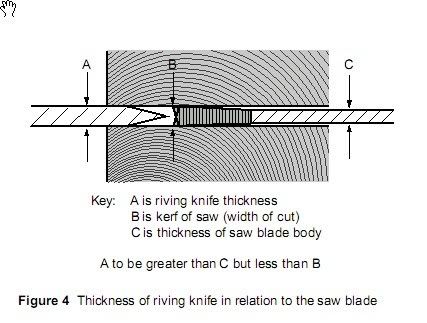
The thickness of the RK should be...well, look at the drawing below...
Regards
niki
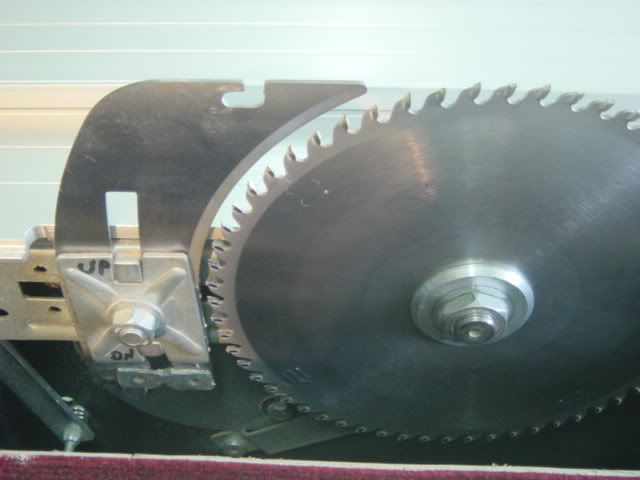
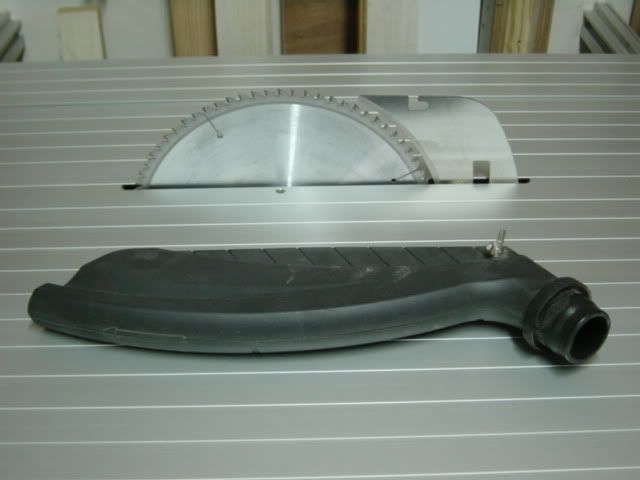
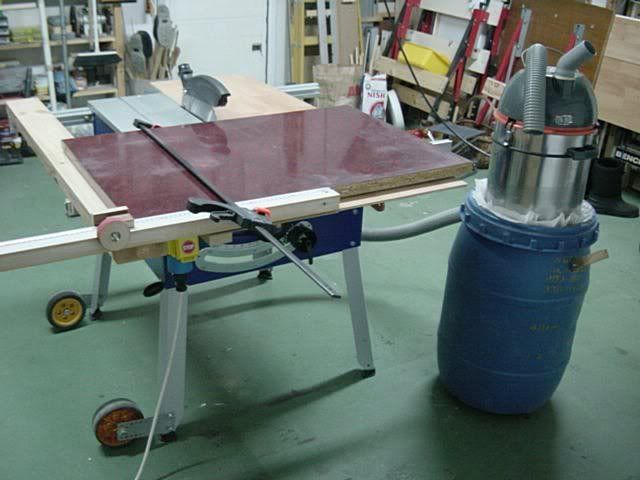
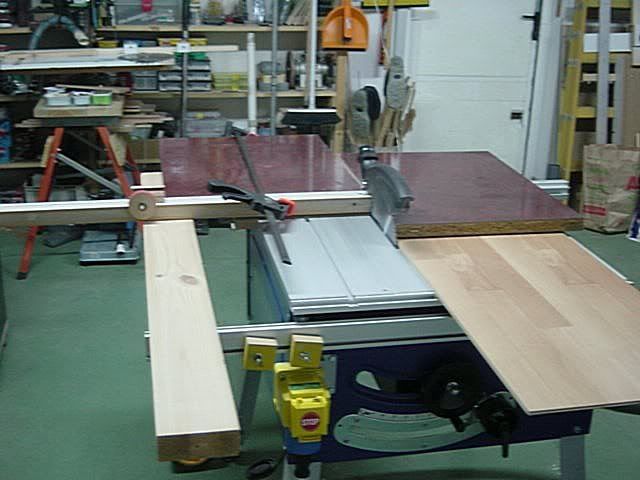
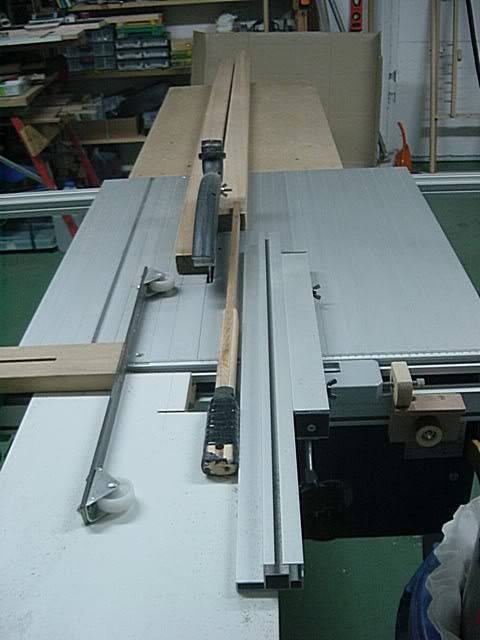
Comment
-
Great pix, Niki! Been missing you around here...
I should add that riving knives are now "required issue" on new table saws in the USA.Comment
-
Actually Niki... the first RV appeared on an American TS before 1930. In 1937 Delta designed and built the Uni-saw which set the standard for modern TS's. From that point until just recently TS manufactures dropped their design and basically cloned the Uni-saw which had the type splitter you see on about all American TS built up until a few years ago.
So... the RV goes back much further than it appears too on the surface. It just remained covered in saw-dust for many years before the idea was brought back to light and put into use.
Regards...Comment
-
Here's a couple of diagrams I made up for this board some ten years ago in response to the same question:


To eliminate the need for the blade guard and allow non-thru cuts with the riving knife installed, I made an Inca-style riving knife for my BT3000 from soft steel; it's on the saw for virtually all cuts not involving the dado blade set.

 ==========
". . . and only the stump, or fishy part of him remained."
Green Gables: A Contemplative Companion to Fujino TownshipComment
-
Am I correct that I can use the Riving knife (Shark Guard)with the Micro-Jig Grr-ripper. I just bought the Grr-ripper & have the Shark Guard coming. Or should I use the Micro-Jig Splitter?
IComment
-
Oh yea, you can use a gripper with a shark. I do it quite often.
The shark's knife is very much like the one Norm made.ErikComment
-
Hi SARGE
I know that the RK was a standard on the old American table saws...
Now, if you can keep a secret....I heard that the Short Fence was also standard on the old American saws but don't tell anyone...
Hi Norm
Well, 10 years ago, I was still in Japan just starting my way in the hobby and had some "Made in Chiwan" ¥20,000 bench saw and I did not have any idea what is a RK...
Very nice explanation drawing and...nice RK you made there.
Mfk
Of course you can use the Grrripper but my "law" is - no hands above or around the blade, guarded or not...
Regards
nikiComment


Comment