

I think this sounds more like a discussion on history than a discussion on religion. Just because it refers to a time of great religious importance doesn't mean it should be avoided. Should we not talk about the piramids? They were built for the beliefs of the ancient Egyptians. All history is important.
-
Last edited by Richard in Smithville; 01-29-2009, 02:16 PM.From the "deep south" part of Canada
Richard in Smithville
http://richardspensandthings.blogspot.com/ -
So Happy New Year everyone, Last Monday the 26th Jan in your gregorian calendars was The Chinese New Year, 4707, Year of the Ox.
Of course they lost track no one really knows if this is 4707 or 4706 or some other year (there are multiple accounts). But, it been running for over 4700 years and, much longer than since 1852.
They got through the millenium bug four times already and no problem. Loring in Katy, TX USA
If your only tool is a hammer, you tend to treat all problems as if they were nails.
BT3 FAQ - https://www.sawdustzone.org/forum/di...sked-questionsComment
-
Diamond and Mike are correct in their statements.
You guys who think it was on the "belief" "dart" and "guessing" system are a product of todays culture.
Before 1900's electornics and telescopes and actually before clocks, people as a whole were much more knowledgeable in these matters than people of today.
As an example: At least yearly the discussion comes up about going into a store, purchasing something for $6.58 then handing the salesperson $11.63 and getting all kinds of weird looks of confusion. Simple math concepts are lost but were so so so common 50 years ago to the extent that the reasoning of "11.63" would have been second nature.
SAME with calendar, timing and navigating by stars to an accuracy far greater than most people of today can possibly imagine. People in the dark ages were not nearly as ignorant as perceived. The "non-knowing" ones are the people of today in calendar, time and distance perspective. Everything is now dependent upon electronics.
Much of the confusion in historical sense is of historians misinterpreting history - such as the debate of what is the real scientific new millennium as in 2001, not 2000. When practical versus actual gets confused, and strong beliefs are thrown into a "historians" reasoning, as in our arguments over a "millennium" then the historian's recordings become in error, not the scientist. However it is usually the historian's account that is believed. On the other hand, scientists do make mistakes too.Last edited by leehljp; 01-29-2009, 05:55 PM.Hank Lee
Experience is what you get when you don't get what you wanted!
Comment
-
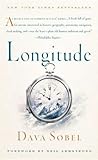
I don't want to derail this discussion at all, but this is a great (and quick) book that will give most readers a fascinating peek inside the business of clockmaking in the 1700's. (Chronographs are related to calendars, right? ) It illustrates Hank's point and will also clue you in to a very creative use for that ironwood that everyone probably has lying around the shop.
Longitude: The True Story of a Lone Genius Who Solved the Greatest Scientific Problem of His Time
New: $4.00 (69% savings)
Used: $3.95 (69% savings)
Rating: 4.0 of 5, 266 review(s)
 online at http://www.theFrankes.com
while ( !( succeed = try() ) ) ;
"Life is short, Art long, Occasion sudden and dangerous, Experience deceitful, and Judgment difficult." -HippocratesComment
-
Well it's year 5769 of the Hebrew calendar if you want to get down with the oldest calender still in use.Opinions are like gas;
I don't mind hearing it, but keep it to yourself if it stinks.

Comment
-
That's awfully presumptuous of you, maxparot. Didn't you see Mars Attacks? Their calendar is clearly much older.
  online at http://www.theFrankes.com
while ( !( succeed = try() ) ) ;
"Life is short, Art long, Occasion sudden and dangerous, Experience deceitful, and Judgment difficult." -HippocratesComment

 LCHIEN


Comment