

There may be a time when an extra long dowel is needed. I had to rehab my back door. The bottom rail was loose to the stiles. The bottom rail was a glue up of two sections. The stiles were 5" wide. I wanted to dowel the rail through the stiles, so I needed dowels that were 8" long.
So, I used off the shelf 1/2" birch dowel rod and cut off 8 dowels 10" each. If you ever experienced a dowel not being able to seat, or getting pushed out from air pressure or from glue, you'll appreciate dowels that are fluted or spiraled.
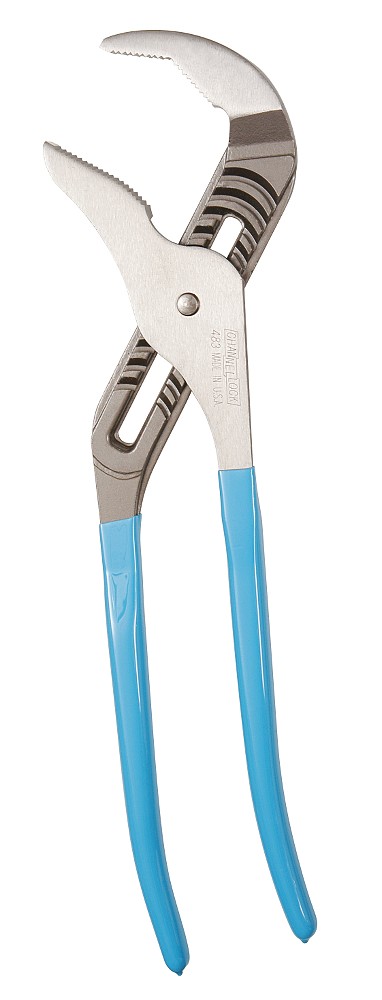
I used an 18" Channel Lock pliers (see pic below), and gripped the dowel tightly at one end, and laid the head of the pliers on a partially opened vise. With a hammer, tapped the dowel down allowing the teeth of the pliers to groove the dowel. Then turn the dowel and repeat until the grooves are all around. When done, lightly sand off any loose splinters, or rough edges.
Drilling the holes you'll need an extra long spade (wood boring) bit, or a long drill bit called a "bellhangers bit". They are pretty common. I had an 18" bit. You'll need to drill a steady hole without wandering the drill, so the dowel will fit well and the exit hole isn't out of round. You could also use a brace and an auger bit.
I was in a rush and didn't have the time to hunt down a die to flute the dowels. This worked just fine.
.
So, I used off the shelf 1/2" birch dowel rod and cut off 8 dowels 10" each. If you ever experienced a dowel not being able to seat, or getting pushed out from air pressure or from glue, you'll appreciate dowels that are fluted or spiraled.
I used an 18" Channel Lock pliers (see pic below), and gripped the dowel tightly at one end, and laid the head of the pliers on a partially opened vise. With a hammer, tapped the dowel down allowing the teeth of the pliers to groove the dowel. Then turn the dowel and repeat until the grooves are all around. When done, lightly sand off any loose splinters, or rough edges.
Drilling the holes you'll need an extra long spade (wood boring) bit, or a long drill bit called a "bellhangers bit". They are pretty common. I had an 18" bit. You'll need to drill a steady hole without wandering the drill, so the dowel will fit well and the exit hole isn't out of round. You could also use a brace and an auger bit.
I was in a rush and didn't have the time to hunt down a die to flute the dowels. This worked just fine.
.


Comment