

See if these pics help get the juices flowing.
While travelling on business I carved out a few hours to visit an art museum. There was a special exhibit of "decorative arts", consisting mostly of art nouveau furniture. This stuff was all created in the late 19th century, mostly by French artisans.
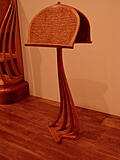
This music stand, by a fellow named Charpentier, has two places for sheet music. Note the nicely qulted panel. There was a second one of these on display, built as a mirror image of this one. The strange coloration of this pic is due to taking it in ambient light with a point-and-shoot camera.
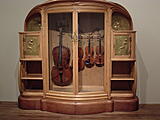
This cabinet, also done by Charpentier, has the same quilted wood in the back panel. Note the bronze reliefs in the doors and above the top shelves. Most of Charpentier's work on display was bronze reliefs. He seemed to come to woodworking later in his career, sometime during the 1890's.
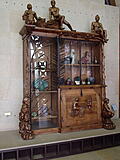
This cabinet wild. Heavy carvings and loads of bronze decoration.
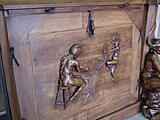
Here's some detail of this cabinet, showing some of the carving, and the custom-cast bronze pulls and decorations.
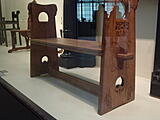
Some of the items clearly showed Arts and Crafts influences, as seen on the keyed tenons of this bench.
Well, there's more, but you get the idea. So if you seem to have hit a wall with your work, take some hints from these pieces.
JR
While travelling on business I carved out a few hours to visit an art museum. There was a special exhibit of "decorative arts", consisting mostly of art nouveau furniture. This stuff was all created in the late 19th century, mostly by French artisans.
This music stand, by a fellow named Charpentier, has two places for sheet music. Note the nicely qulted panel. There was a second one of these on display, built as a mirror image of this one. The strange coloration of this pic is due to taking it in ambient light with a point-and-shoot camera.
This cabinet, also done by Charpentier, has the same quilted wood in the back panel. Note the bronze reliefs in the doors and above the top shelves. Most of Charpentier's work on display was bronze reliefs. He seemed to come to woodworking later in his career, sometime during the 1890's.
This cabinet wild. Heavy carvings and loads of bronze decoration.
Here's some detail of this cabinet, showing some of the carving, and the custom-cast bronze pulls and decorations.
Some of the items clearly showed Arts and Crafts influences, as seen on the keyed tenons of this bench.
Well, there's more, but you get the idea. So if you seem to have hit a wall with your work, take some hints from these pieces.
JR


Comment